

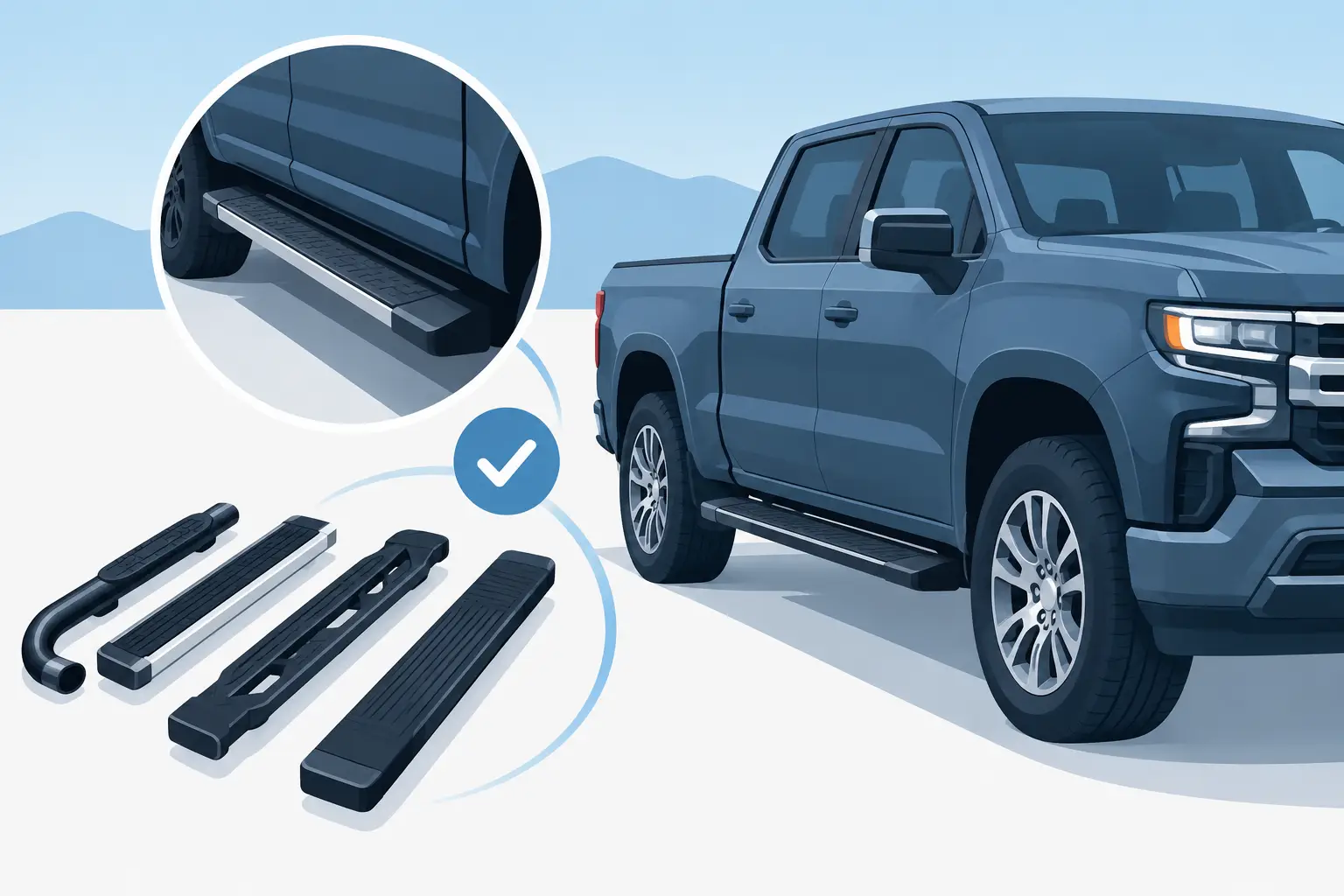
A bent or missing step is more than a cosmetic problem. Drivers use it every day, and a replacement that sits too high, interferes with a fuel tank, or misses the factory brackets can put the truck back in the shop. The question is not simply which truck steps fit. The right question is which step assembly fits this exact truck configuration.
Commercial truck steps are often listed by make, model series, and production year, but those details are only the starting point. Cab style, fuel tank placement, battery box position, fairings, and bracket design can all change the part required. Confirming those differences before ordering prevents return freight, installation delays, and unnecessary downtime.
Which Truck Steps Fit Your Truck Configuration?
Start with the truck manufacturer and model series, then narrow the application by year range. A step for a Freightliner Columbia is not automatically interchangeable with a Freightliner Classic or Century. The same principle applies across Peterbilt, Kenworth, International, Volvo, Mack, Western Star, Ford, Hino, and GM commercial applications. Similar-looking cabs and steps can use different brackets, tread widths, or mounting-hole locations.
After identifying the series, determine whether you need the driver-side or passenger-side step. This sounds basic, but side-specific components are frequently ordered incorrectly when a truck has damage on both sides or when a repair order uses only a general description such as “cab step.” Fuel tanks, battery boxes, exhaust routing, and under-cab equipment often make left- and right-side assemblies different.
Also verify whether the part needed is a single lower step, an upper step, a complete step assembly, a step support, or a step panel integrated into an exterior fairing. A truck may have a damaged tread plate while the mounting structure remains usable. In other cases, the visible step is intact but the bracket behind it is bent from a curb strike or collision. Ordering only the exposed step will not correct a damaged support.
The Fitment Details That Change the Part
Year, make, and model matter, but commercial truck fitment is rarely that simple. The following details should be checked against the truck before a replacement step is selected:
- Cab configuration, including day cab, extended cab, sleeper cab, and sleeper size
- Step location, including cab entry, fuel-tank step, battery-box step, bumper step, or fairing-mounted step
- Fuel tank and battery-box arrangement, especially on trucks with different wheelbase or vocational specifications
- Factory fairings, skirts, or side extenders that cover or attach to the step assembly
- Mounting style, including bolt pattern, bracket shape, support location, and tread-plate dimensions
A long-wheelbase highway tractor may use different under-cab equipment than a short-wheelbase vocational truck of the same series. Likewise, a truck equipped with aerodynamic side fairings may require a step designed to work with those panels, while a non-faired truck uses an exposed assembly. The catalog application may look correct until the mounting area is compared.
Cab and Sleeper Differences
Cab steps can change when the manufacturer changes the cab, door opening, sleeper configuration, or lower body panels. On some applications, the step itself may be similar while the support brackets differ. On others, the entire assembly changes length or contour to meet the adjacent fairing or battery box.
Do not assume a part fits because the door and hood look the same. Hoods, grilles, headlights, and cab panels often help identify a truck series, but step fitment is controlled by what is below the door. Inspect the step area and note the shape of the mounting flange, the number of fasteners, and the relationship between the step and nearby equipment.
Fuel Tank, Battery Box, and Exhaust Layout
The layout under the cab is one of the most common fitment exceptions. A driver-side step may be tied directly to a fuel tank bracket, while the passenger-side step attaches near a battery box or air cleaner support. Some trucks also use step assemblies that incorporate access to battery boxes, DEF components, or other service points.
Exhaust placement matters as well. A step designed for one exhaust arrangement may conflict with a vertical stack support, heat shield, or emissions-related component on another configuration. If the truck has been modified from its original specification, compare the actual installation instead of relying on the VIN year alone.
How to Identify the Correct Replacement Step
The fastest path to a correct order is to work from the truck itself. Record the manufacturer, model series, model year, VIN, and the side of the truck. Then take clear photos of the damaged step, the mounting area, the surrounding tank or battery box, and any remaining brackets. Include a wider photo that shows where the step sits in relation to the cab and fairings.
Measure the overall length and width of the existing step when possible. Measurements do not replace a proper application check, but they can quickly expose an incorrect part. A tread plate that is several inches shorter than the original or a bracket pattern that does not match should stop the order before it leaves the shop.
If an original part number is visible on the step, bracket, or support, keep it with the job information. OEM numbers, casting numbers, and stamped identifiers can help distinguish nearly identical assemblies. Be careful with numbers found on the tread surface alone, since they may identify only a replaceable step insert rather than the complete mounting assembly.
Check the Damage Before Ordering
Collision damage can travel farther than it appears. A step that is pushed inward may have damaged the cab mounting point, fairing support, tank strap bracket, or lower cab panel. Before ordering, inspect the fasteners and structure behind the damaged component. If the frame-side or cab-side support is bent, the repair may require more than a replacement step.
This is especially relevant on fiberglass and composite exterior components. A cracked fairing or extension can leave the step unsupported even if the step itself is usable. Repair planning should account for the complete assembly, not only the part the driver can see.
When Year and Model Are Not Enough
Fleet trucks frequently carry options that make broad catalog descriptions incomplete. A 2015 model-year truck may have a late-production cab update, a different fuel capacity, or a vocational package that uses alternate equipment. Rebuilt trucks can also combine parts from different years after previous repairs.
For these applications, compare physical details. Look at the tread pattern, number of steps, bracket offsets, tank shape, fairing profile, and attachment points. If those details do not match the listing, stop and verify the application. Forcing a near-match step into place can create unsafe access, vibration, cracked brackets, or interference during cab movement and service work.
Front Ends 4 Trucks works with commercial truck exterior components where those fitment distinctions matter. If the catalog description does not resolve the configuration, have the truck information and photos ready, then call 866-955-9755 for direct assistance with the application.
Common Ordering Mistakes to Avoid
The most expensive mistake is ordering by appearance alone. Many step assemblies share a similar aluminum tread, black finish, or basic shape, but attach differently once installed. Another common error is ordering the step without the brackets, only to find that the original support is bent or rusted beyond reuse.
Avoid relying solely on a repair estimate description. Estimates may identify a “left step” without specifying whether it is a cab entry step, a tank-mounted step, or an assembly behind a side fairing. Confirm the exact location on the truck before matching the part.
Finally, do not treat fitment exclusions as minor details. Notes about hood length, cab style, fuel-tank position, headlamp arrangement, or fairing configuration exist because a similar part does not fit every truck in that series. Those exceptions are often the difference between a direct installation and a truck waiting on the correct component.
A proper step order starts at the mounting points, not the product photo. Match the truck’s actual configuration, inspect the surrounding structure, and verify the side and assembly level before committing to the part. That extra check is usually faster than handling a return when the truck needs to be back on the road.