

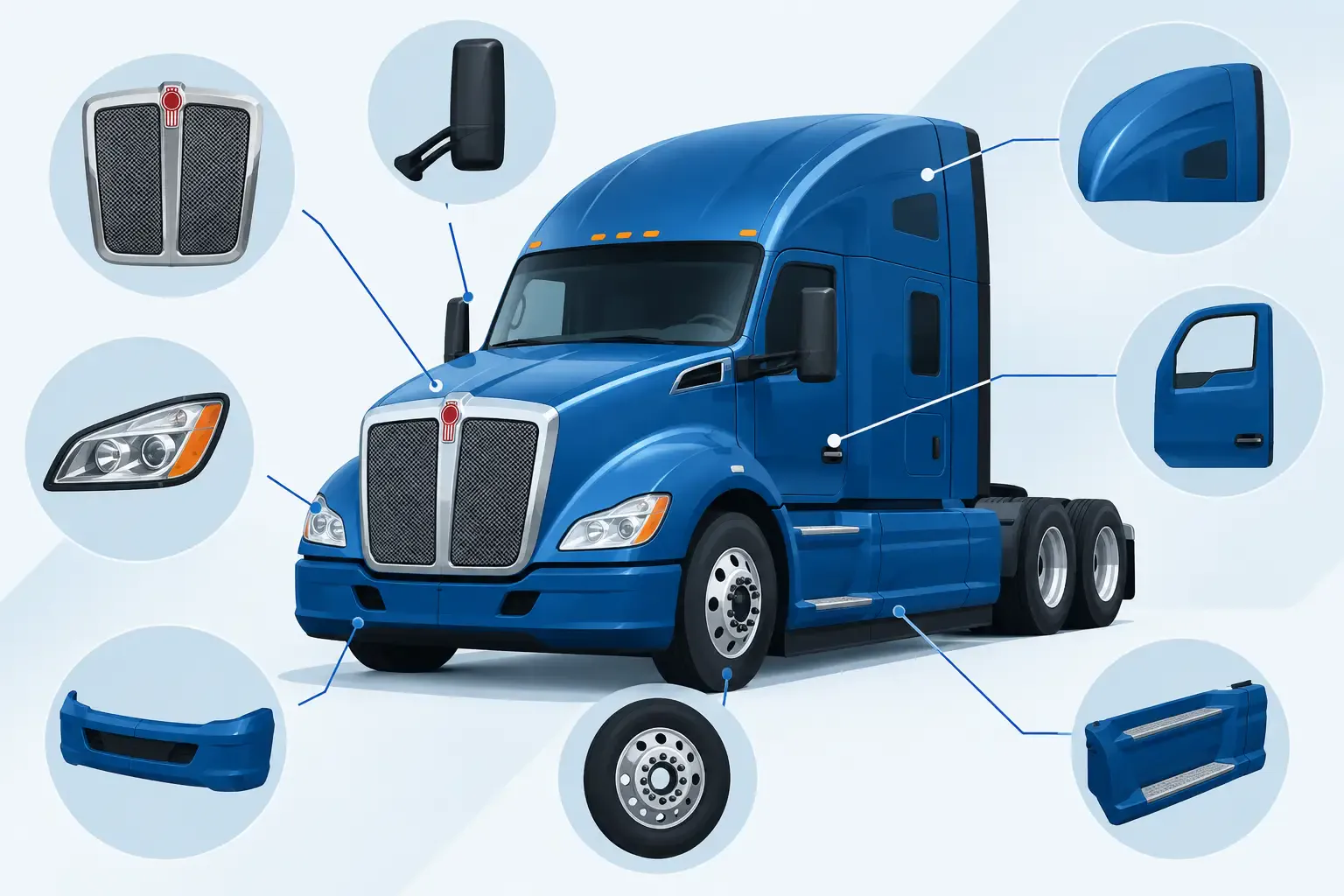
A damaged hood corner, broken grille surround, or missing step panel can keep a Kenworth T680 out of service longer than the actual collision repair. This Kenworth T680 exterior parts guide is built for shops, fleets, and owner-operators that need to identify the right replacement component before ordering. The T680 has evolved through multiple production configurations, and exterior parts are not interchangeable simply because the truck carries the same model badge.
The fastest path to a correct repair is to identify the truck by its physical configuration first, then match the damaged component to that configuration. Model year matters, but it is only one part of the fitment check. Hood design, headlamp style, grille arrangement, cab configuration, axle layout, and factory aero equipment can all change the part required.
Why T680 Exterior Fitment Starts With the Front-End Configuration
The hood assembly is the starting point for most front-end T680 repairs. A hood is not just a shell. It determines the relationship between the grille, grille surround, headlamps, bumper, fenders, hood extensions, air intake components, and mounting hardware. Ordering a visually similar part without confirming those details can create unnecessary labor, delayed paint work, and a truck that cannot return to service on schedule.
Start by determining whether the truck is an earlier T680 configuration or a newer-generation model. Compare the headlamp opening shape, grille design, hood contours, and front fascia before selecting a hood, fender, grille, or lamp assembly. Do not assume a replacement part fits because it is listed for a broad range of T680 years. A part may fit only a specific headlamp arrangement, grille type, or hood length within that range.
For collision work, inspect more than the visibly damaged area. A grille impact can also damage hood brackets, grille surrounds, headlamp mounting tabs, bumper supports, and inner panels. Replacing only the cracked outer component may leave alignment problems that show up when the hood is closed or the lamps are aimed.
Kenworth T680 Exterior Parts Guide: Major Replacement Areas
Hoods, fenders, and hood extensions
The hood is generally the largest and most critical exterior replacement component on a T680. Fiberglass hoods can be a practical solution for collision repair or refurbishment, but the exact configuration must be confirmed before purchase. Check the hood length, headlamp opening, grille opening, hinge style, air intake provisions, and the condition of the surrounding components.
Fenders and hood extensions need the same attention. Their shape and mounting points follow the hood and front fascia design. If one side has been replaced previously, compare both sides carefully. A truck may have a mixed front end after an earlier repair, especially when used components or incorrect aftermarket parts were installed.
Before fitting a replacement hood, inspect the hinges, latch mechanism, latch supports, hood stops, support rods, and radiator support area. A new hood will not correct a bent support structure. Test-fit major fiberglass components before final bodywork and paint whenever possible. This step helps identify alignment concerns while adjustments are still straightforward.
Grilles, grille surrounds, and front trim
The grille and grille surround affect appearance, airflow, and front-end alignment. T680 grille assemblies can vary by production period and styling package, so match the opening shape and mounting layout rather than relying on a general model description. Verify whether the replacement is the grille itself, the surrounding trim, a separate insert, or a complete assembly.
Pay close attention to broken mounting points. A grille can look serviceable from the front while its tabs or rear retainers are damaged. Loose trim often leads to vibration, poor panel gaps, and repeat repairs. If the truck has active airflow components, sensors, or wiring routed near the grille area, inspect those items before reassembly as well.
Bumpers, valances, and lower front panels
A T680 bumper repair requires more than matching the visible finish. Confirm bumper width, end shape, mounting brackets, tow provisions, sensor openings, and the design of the lower front fascia. Chrome, painted, and aerodynamic bumper options can have different fitment requirements.
Look behind the bumper before ordering. Bent brackets, damaged frame-mounted supports, cracked lower valances, and missing hardware are common after a low-speed impact. Reusing compromised brackets can pull a new bumper out of alignment and leave uneven gaps at the hood or fender edges.
Headlamps, bezels, and lighting components
Headlamp fitment is one of the most frequent T680 ordering errors. The lamp housing, bezel, hood opening, mounting brackets, and electrical connector arrangement must all agree. Compare the original assembly directly, including lens shape, mounting locations, connector position, and any built-in lighting functions.
Do not treat a lamp replacement as a cosmetic repair. Check for damaged mounting tabs, moisture intrusion, broken adjusters, rubbed wiring, and cracked surrounding panels. After installation, verify lamp aim and all lighting functions. A lamp that physically mounts but does not match the truck’s electrical setup can add more downtime than the original damage.
Side fairings, steps, battery boxes, and cab-side panels
Side damage is often overlooked until the truck is back on the road. Fairings, steps, battery box covers, fuel tank straps, cab panels, and lower skirts take regular exposure to road debris, curbs, corrosion, and trailer contact. On an aerodynamic truck like the T680, these components also affect the finished appearance and can protect equipment mounted below the cab.
Confirm the side of the truck, wheelbase-related panel length, battery box layout, fuel tank configuration, and step arrangement. A right-side fairing or step panel may not mirror the left side, and a panel used with one tank or battery box setup may not clear another. Check for hidden damage to mounting rails and brackets before replacing outer covers.
Information to Verify Before Ordering T680 Exterior Parts
A correct order begins with clear identification. Have the VIN available, but also document the actual truck with photos of the front, both sides, the damaged area, and any labels or part numbers still present. The VIN helps establish the build, while photos confirm what is on the truck now.
For a major exterior component, verify these points before placing an order:
- Model year and whether the truck is an earlier or newer-generation T680
- Hood length, hood shape, hinge arrangement, and headlamp opening design
- Grille style, grille surround shape, and bumper configuration
- Headlamp type, connector layout, and lamp features
- Cab-side equipment layout, including steps, battery boxes, tanks, and fairings
- Whether brackets, supports, hardware, or related panels are also needed
This information is especially valuable when repairing a truck with prior bodywork. The original factory configuration may have changed, and the component currently on the vehicle is what the replacement part must work with.
Collision Repair Versus Fleet Refurbishment
Collision repairs usually begin with a defined impact area, but the damage can spread across several connected parts. A broken hood, for example, can require a grille, lamp, fender extension, bumper bracket, and hardware. Building the full parts list before ordering prevents a partially completed repair bay from waiting on one overlooked panel.
Fleet refurbishment is different. The goal may be to replace weathered hoods, faded grilles, cracked fairings, worn steps, or corroded battery box components across several units. Consistency matters in this situation. Standardizing the part selection by truck configuration can simplify inventory planning, paint scheduling, and future repairs.
Aftermarket replacement parts can control repair cost and support older trucks that are difficult to keep presentable with limited OEM availability. The trade-off is that fitment still needs to be checked at the configuration level. A lower purchase price does not help if the part requires avoidable modification or cannot be installed with the truck’s existing components.
When the Catalog Listing Does Not Answer the Fitment Question
Some T680 applications need a closer review, particularly trucks with specialized aero packages, nonstandard cab equipment, previous collision repairs, or missing identification tags. In those cases, part photos, dimensions, and the original component details can resolve questions faster than making an assumption from the model name alone.
Front Ends 4 Trucks focuses on commercial-truck exterior components and can provide direct assistance when a visible listing does not settle a configuration question. Have the truck details and photos ready before calling 866-955-9755. Clear information at the start helps identify the part needed and reduces the risk of ordering a component that does not match the truck.
A T680 repair moves faster when fitment is treated as part of the repair plan, not as a final ordering step. Confirm the configuration, inspect the related brackets and panels, and make sure the replacement part matches the truck that is actually in the bay.
 Spanish
  English