

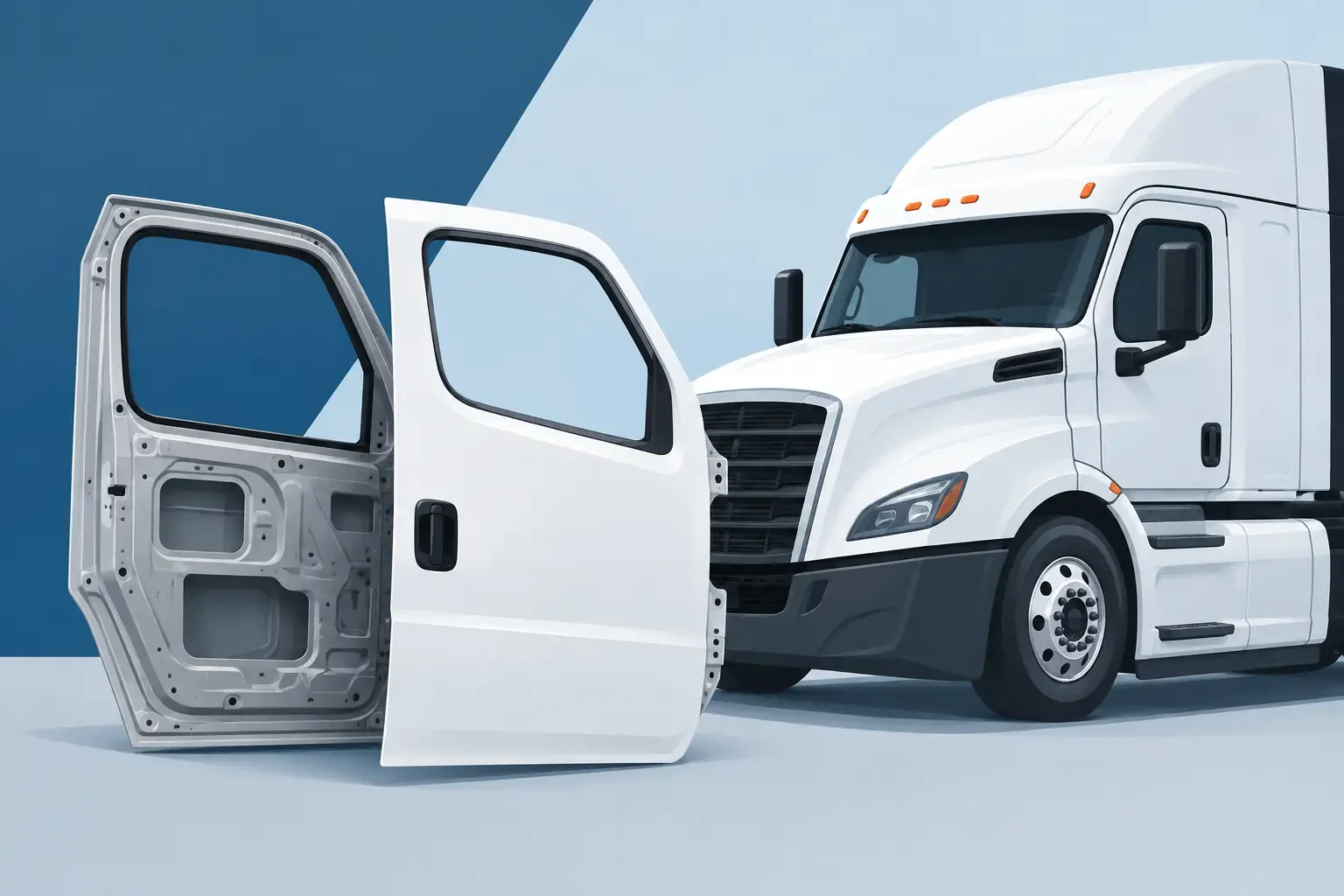
A truck can be back from a collision repair with a straight hood and fresh bumper, then lose another day because the door panel does not match the cab, hinge setup, window opening, or latch hardware. Commercial truck door replacement panels are not a universal body part. The correct order starts with identifying exactly what failed and exactly how the truck was built.
For repair shops and fleet maintenance teams, that detail protects labor time. A low-cost panel that requires drilling, reshaping, or transferring damaged hardware is not a cost-saving repair. The goal is to restore a door that aligns with the cab, closes correctly, protects the interior, and returns the unit to service without creating a second repair.
Start by Defining the Door Repair
The term door panel can mean several different parts. In collision work, it may refer to the exterior door skin or outer shell. In other cases, the needed part is a complete door assembly, an interior trim panel, a lower repair section, or a cab-side panel adjacent to the door opening. These parts are not interchangeable, even when they are listed under the same truck make.
A dent limited to the outer skin may be repairable if the inner structure, intrusion reinforcement, window frame, hinges, and latch area remain straight. If the door has a crushed leading edge, broken hinge mounting, distorted window channel, or latch misalignment, a complete replacement door or a larger structural repair may be the better call. Reusing a bent door to save the shell cost often transfers the problem to alignment, weather sealing, and repeated adjustment time.
Before ordering, inspect the door open and closed. Check the gap at the fender, cab pillar, and rocker; look for witness marks at the striker; and confirm whether the glass travels smoothly. Water leaks, wind noise, and a door that must be slammed are operational signs that the repair needs more than a cosmetic panel.
Commercial Truck Door Replacement Panels Need Exact Fitment
Commercial truck applications have more fitment variables than a simple make-and-model search can show. A Freightliner, International, Kenworth, Peterbilt, Mack, Volvo, Ford, or Western Star cab may have multiple door designs across a model run. Cab style, production year, day cab versus sleeper configuration, and vocational versus highway setup can all change the panel or assembly required.
The most useful identification information is the truck’s VIN, make, model, and model year, but do not stop there. Compare the existing door to the replacement listing and document the physical details that affect installation. This includes whether the door is left or right side, the number and location of hinges, mirror mounting points, window type, vent or fixed-glass configuration, exterior handle style, interior trim layout, and lock or power-window provisions.
On older trucks, previous repairs add another layer. A replacement cab, door, or aftermarket mirror setup may not match the truck’s original build. Measure and compare rather than relying only on the badge on the hood. Clear photos of the exterior, hinge side, latch side, inside trim area, and data plate help resolve applications where catalog information alone is not enough.
Left and Right Are Not the Only Differences
Driver-side and passenger-side doors are mirror-image parts, but side designation is only the first filter. A door with a mirror bracket provision may not work for a truck using cab-mounted mirrors. A panel cut for a manual window regulator may need different holes or reinforcements than a power-window version. Door-mounted electrical controls, courtesy lamps, speaker openings, and grab-handle locations can also vary.
Check the window frame closely. Some heavy-duty door designs use a full frame around the glass, while others use different upper structures or glass channel arrangements. A lower panel may look correct in a photo but still be wrong if its upper frame, beltline molding attachment, or inner shell configuration differs from the original.
Verify What Is Included
A replacement panel, door shell, and complete door assembly are priced and supplied differently. A bare outer skin typically requires metalwork or bonding procedures and transfer of existing components. A shell may include more structure but still require hinges, glass, regulator, latch, wiring, weatherstrip, handles, mirrors, trim, and paint work. A more complete assembly can reduce installation time, but only if its included hardware matches the truck.
Read the product description for included and excluded components before scheduling the job. Do not assume glass, hinges, latches, regulators, or interior panels come with the part. If reusable components are damaged, corroded, or unavailable, identify those needs before the truck is disassembled.
Match the Part to the Repair Strategy
The right commercial truck door replacement panel depends on the damage, shop capability, truck age, and downtime target. There is no single best choice for every unit.
An exterior skin can make sense when the impact is shallow and localized, the inner door is straight, and the shop has the equipment to perform a quality skin replacement. This approach can preserve original hardware and may be practical for a fleet that maintains its own body repair capability. It also requires careful corrosion protection on exposed seams and repaired areas.
A door shell is often the better route when the skin is damaged along with the edges, lower structure, or window-channel area. It provides a sound base for transferring serviceable components, but transfer labor must be included in the estimate. Check all mounting points before paint, because a shell that is not test-fitted can turn a finished paint job into a rework problem.
A complete replacement door may be justified after a severe collision, when the original door is heavily corroded, or when the truck cannot stay down for extended fabrication. The trade-off is a higher initial component cost and the need to confirm each option, opening, and hardware provision. For a revenue-producing truck, faster and more predictable installation can outweigh the price difference.
Plan the Installation Before Paint
Door alignment should be established before final paint and trim installation. Hang the door with the correct hinges, check cab and fender gaps, and verify that the latch meets the striker without lifting or dropping the door. If the truck has front-end damage, confirm fender and cab alignment first. A perfectly correct door cannot compensate for a shifted fender, damaged cab corner, or bent hinge pillar.
Install or test-fit the regulator, glass, run channels, weatherstrip, latch, and handles while access is open. The glass should raise and lower without binding, and the latch should release consistently from inside and outside. Verify electrical connectors for locks, windows, mirrors, and door switches before final assembly. For trucks used in harsh weather or washdown environments, inspect vapor barriers and drain paths so water does not enter the cab or collect inside the door.
After bodywork, protect bare metal, seams, and lower door areas with the correct corrosion-control materials. Road salt, gravel, and moisture concentrate at the bottom edge of commercial truck doors. A repair that looks clean at delivery can fail early if the seam treatment and drainage are ignored.
Avoid the Ordering Delays That Keep Trucks Parked
Most wrong-part delays happen because an order is placed from a broad description such as “2007 truck door” without confirming the cab configuration and door details. The faster approach is to gather the identifiers before contacting a supplier or selecting a catalog application. Keep the VIN, unit number, make, model, year, side, photos, and a description of the needed part together with the estimate.
For a fleet, add these details to the damage-report process. Standardized photos and part-identification notes let a maintenance manager, body shop, and parts supplier work from the same information. This reduces the back-and-forth that occurs after a panel arrives and the installer finds a different hinge pattern or window setup.
Front Ends 4 Trucks organizes commercial exterior components by manufacturer and vehicle series because those fitment details matter. When the visible application does not answer a question, provide the truck information and photos before ordering. Direct parts support is especially useful for older units, discontinued applications, specialty bodies, and trucks that have had prior collision repairs.
Inspect the Rest of the Cab While the Door Is Open
A damaged door can hide related damage at the hinge pillar, cab step, rocker, fender extension, mirror, or door opening. Inspect the striker and latch for wear, check the weatherstrip for compression or tears, and look at the door check or limiter for cracking. Replacing these worn items during the same repair may prevent another service event shortly after the truck returns to work.
The best replacement is the one that fits the truck’s actual configuration, supports a correct repair, and stays in service after the paint dries. Confirm the panel type, verify every fitment detail, and test the door before final assembly. That disciplined process keeps a body repair from becoming an avoidable downtime problem.
 Spanish
  English