

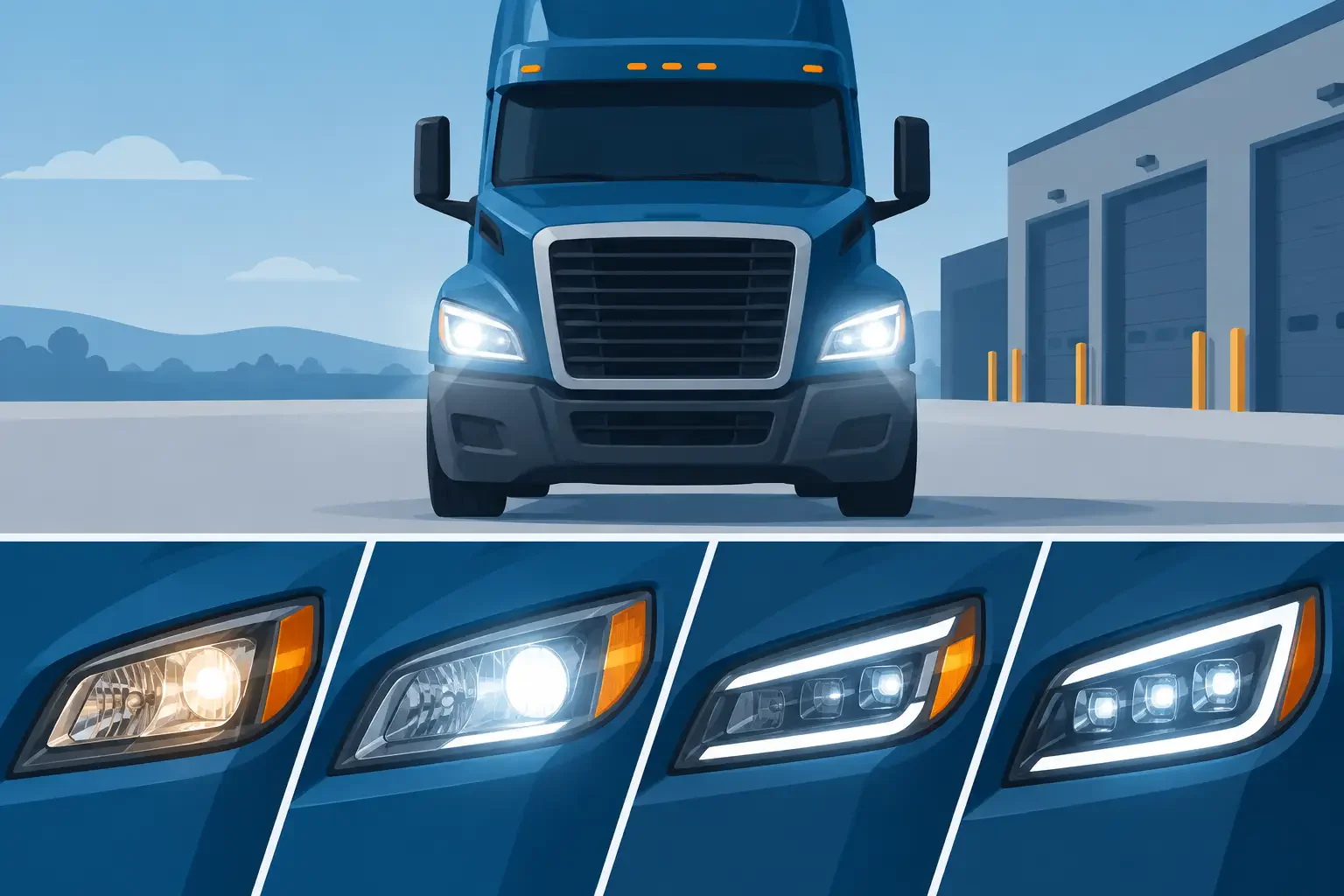
A replacement headlamp that looks right on the bench can still be wrong for the truck. In a commercial truck headlights comparison, the deciding details are usually not cosmetic. Hood length, grille design, headlamp layout, mounting tabs, bulb configuration, and model-year changes can determine whether the assembly installs correctly or sends the job back to the parts counter.
For a collision repair shop or fleet maintenance department, headlights are front-end components, not generic lighting. A cracked lens, broken adjuster, water intrusion, or damaged mounting ear often follows impact damage to the hood, fender, grille surround, bumper, or headlamp bezel. The best replacement choice is the one that restores the truck’s original configuration with the least rework and the fewest fitment surprises.
Truck Headlights Comparison: Start With Configuration
Start with the truck’s make, model series, and production year, but do not stop there. Commercial trucks commonly carry different front-end designs within the same model family. A mid-cycle grille change, revised hood, optional daytime running lights, or a different high-roof cab can affect the headlamp assembly used on the truck.
Verify the Vehicle Identification Number when it is available, then inspect the removed assembly and the front end around it. Record whether the lamp mounts directly to a hood, fender, grille surround, or separate headlamp bucket. Note the number and position of mounting points, connector style, bulb count, and the location of turn signal or marker sections. These details matter more than a broad description such as “fits Freightliner” or “fits Peterbilt.”
A left-hand and right-hand headlamp are not interchangeable. Lens shape, reflector pattern, mounting tabs, and wiring positions are side-specific. Confirm the driver or passenger side from the seated driving position, not from the viewpoint standing in front of the truck.
Match the Front-End Version, Not Just the Badge
Truck manufacturers often use one cab with multiple hood lengths and grille configurations. That means two trucks with the same nameplate may use different headlights. Conventional and cab-over models, set-forward and set-back axle configurations, and vocational front ends can also change the lamp shape or surrounding body panels.
Compare the truck to the original assembly in these areas: lens profile, upper and lower mounting locations, lamp-to-grille relationship, turn signal position, and connector location. If the hood, grille, fender, or surround has already been replaced, verify that those parts match the truck’s intended front-end version. A new headlamp will not correct a mismatch between an earlier grille surround and a later-style hood.
Assembly Type: Sealed Beam, Replaceable Bulb, or LED
The lighting technology affects the repair path, cost, and available replacement options. It does not replace the need to verify fitment.
Older trucks may use round or rectangular sealed-beam lamps mounted in a bucket or bezel. When the lamp fails, the sealed unit is replaced. The surrounding bucket, retaining ring, adjusters, and bezel should be inspected at the same time. A corroded retaining ring or stripped adjuster can turn a simple lamp replacement into an aiming problem.
Many late-model and mid-generation trucks use composite headlamp assemblies with replaceable halogen bulbs. The lens, reflector, bulb sockets, and sometimes the turn signal or marker lamp are integrated into one housing. A broken lens or damaged reflector normally calls for an assembly replacement, while a burned-out bulb may be serviced separately. Check the rear access clearance before ordering or installing, especially where air cleaner housings, battery boxes, or hood structures crowd the back of the lamp.
LED assemblies are common on newer equipment and may combine low beam, high beam, turn signal, marker, and daytime running light functions. They can offer long service life, but a failed LED section often means replacing the complete assembly. The connector, control module arrangement, and truck-side wiring must match the original design. Do not assume an LED assembly is a direct upgrade for a halogen-equipped truck simply because the lens shape appears similar.
Beam Pattern and Road-Side Use Matter
Headlamps are engineered with a beam pattern for the vehicle’s intended road-side use. For US commercial trucks, use assemblies designed for US operation and appropriate roadway compliance. The low beam has a controlled cutoff and distribution pattern intended to light the lane without excessive glare to oncoming traffic.
Do not substitute a headlamp intended for another market based on appearance alone. Differences in beam pattern, marking, connector arrangement, and internal reflector design can affect visibility and inspection compliance. For fleets operating across state lines, consistent replacement specifications also make future service and driver feedback easier to manage.
After installation, aim the headlights using the truck manufacturer’s procedure or an approved shop process. A correctly fitted lamp can still perform poorly if it is aimed too high, too low, or off center. Before aiming, make sure the hood, fender, grille surround, and headlamp mounting points are properly aligned. Trying to compensate for bent body panels with an adjuster is not a repair.
What Damage Usually Requires More Than a Headlamp
A headlamp assembly should not be ordered in isolation after a front-end impact. Inspect the related components before the truck is disassembled beyond the point where evidence is lost. Broken tabs on the lamp may indicate damage to the hood edge, fender extension, headlamp bracket, grille, grille surround, or bumper reinforcement.
Water inside a composite lamp may come from a cracked lens, failed rear cap, damaged vent, or a housing seam problem. If the housing is intact and the moisture source is serviceable, replacement may not be necessary. If the reflector is stained, the lens is cracked, or the seal has failed at the housing, replacing the assembly is generally the better repair.
Check the harness for rubbed insulation, pulled terminals, melted sockets, and corrosion. Replacing the lamp without correcting a loose connector or overheated bulb socket can create a repeat failure. On LED applications, inspect connectors for water entry and verify that the truck-side harness has not been stretched by hood movement or collision damage.
Halogen Versus LED: Compare the Whole Repair
Halogen replacement assemblies are often a practical choice when matching an existing truck configuration. Bulbs are widely serviceable, initial parts cost can be lower, and the electrical system is already designed for that setup. The trade-off is that bulbs eventually require replacement, and heat can damage sockets or haze lower-quality housings over time.
LED assemblies can reduce routine bulb service and may provide a more consistent light output through their service life. However, the initial assembly cost can be higher, and individual LED elements may not be separately repairable. If a truck was built with LED lamps, replacing one side with a different lighting technology can produce uneven appearance, beam performance, and electrical behavior.
For fleets, standardization usually wins. Use the same approved headlamp type across comparable units when possible, document the part numbers used, and keep common service items on hand. For owner-operators repairing one truck, the right choice depends on original equipment, budget, downtime, and whether matching the opposite side is necessary for a professional repair.
Ordering Information That Prevents Returns
Before placing an order, gather the make, model series, year, and side needed. Add the headlamp’s bulb or LED arrangement, connector description, and any visible numbers molded into the housing. Photos of the front end and the back of the removed assembly can resolve many questions, particularly when a truck has undergone prior collision repairs.
Also identify the surrounding components. State whether the truck has a particular hood style, grille type, chrome or painted surround, integrated turn signal, or separate marker lamp. If the listing includes fitment exclusions, treat them as part of the part description. A note such as “does not fit dual-headlamp grille” is not a minor detail. It is the difference between a direct installation and an unusable part.
Front Ends 4 Trucks focuses on the front-end details that affect commercial-truck fitment, including the related hoods, fenders, grilles, surrounds, and lighting components. When the catalog does not fully identify an unusual application, direct parts support is the right next step before ordering.
A few extra minutes spent matching the original lamp, front-end configuration, and mounting arrangement can keep a truck out of the bay twice. That is the comparison that protects repair time, parts budget, and vehicle uptime.
 Spanish
  English