

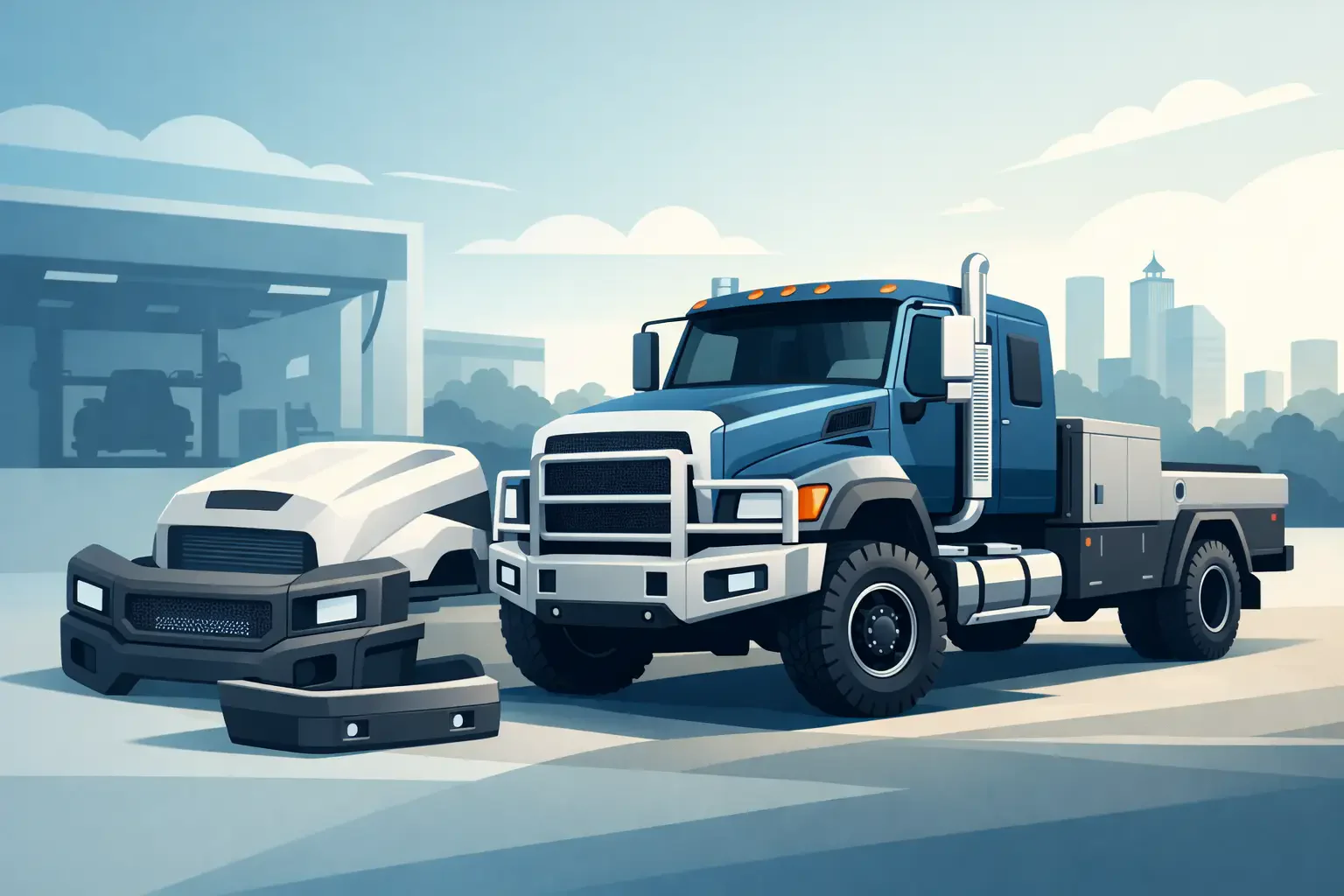
A damaged hood, missing grille surround, cracked fender, or broken step can keep a commercial truck out of service long after the mechanical repair is complete. The right aftermarket bodywork gives repair shops, fleets, and owner-operators a practical way to replace damaged exterior components without settling for a part that only looks close enough. On medium- and heavy-duty trucks, close enough is often where costly fitment problems begin.
Truck body parts are not interchangeable simply because two units share a manufacturer name or a similar cab. Hood length, headlamp style, grille opening, axle position, intake location, hinge design, and model year can all change the part required. A correct replacement starts with identifying the truck configuration before ordering, not after the part arrives.
What Aftermarket Bodywork Covers
Aftermarket bodywork includes the exterior panels, front-end assemblies, trim, and related components used to restore the appearance, protection, and operating condition of commercial trucks. Depending on the application, that can include fiberglass hoods, hood shells, fenders, fender extensions, bumper assemblies, grilles, grille surrounds, headlamps, doors, steps, battery boxes, roof fairings, side fairings, cab panels, and air cleaner components.
These are working parts, not cosmetic extras. A hood must latch, hinge, clear the tires, align with the bumper and grille, and provide access for daily service. A headlamp assembly must match the correct mounting area and surrounding bezel. A fender extension has to meet the hood and cab lines correctly while handling road vibration, weather, and routine use.
For collision repair, aftermarket replacement components can be especially useful when an original part is expensive, delayed, discontinued, or no longer practical for the age of the truck. For fleets, they also support planned refurbishment work on units that remain mechanically sound but need exterior repairs before returning to service or resale.
Fitment Is the First Job
The most common body-part ordering mistake is identifying a truck only by make and approximate year. That information narrows the search, but it rarely completes it. A 2007 truck can have a different front-end configuration than another 2007 truck from the same manufacturer, particularly during changeover years or when multiple hood and cab options were offered.
Start with the vehicle identification number, then confirm the visible and physical configuration. Record the manufacturer, model or series, production year, hood type, hood length, headlight layout, grille style, cab style, axle arrangement, and any distinguishing features such as side intake openings or specific hinge locations. If the original part is still available, compare its mounting points, shape, and part number where possible.
Hood length changes the whole front end
On conventional trucks, hood length is one of the most important identifiers. A short hood and long hood from the same model family may use different fenders, bumper fitment, grille components, headlamp panels, and hood extensions. Ordering a hood by model name alone can create a mismatch at every adjoining panel.
Measure when the application is unclear. Confirm the location of the front axle in relation to the cab and hood, and compare the overall hood profile with the truck being repaired. This is particularly important on vocational, regional-haul, and older fleet units where the truck may have been modified during its service life.
Lighting and grille details matter
Headlight changes are another frequent source of incorrect orders. A model may use round, rectangular, composite, or integrated headlamp assemblies across different production periods. The hood may look similar while the headlamp pocket, grille surround, or lower fascia is different.
Grille configuration matters for the same reason. Count openings, inspect the grille shape, and note whether the grille mounts to the hood, radiator support, or a separate surround. A replacement grille that does not match the existing hood and mounting system adds time to a repair that should have been straightforward.
Choosing the Right Material and Part Type
The correct material depends on the component, truck application, damage type, and expected service conditions. Fiberglass is commonly used for replacement hoods and certain exterior panels because it resists corrosion and can provide a cost-effective alternative to some original assemblies. It is also well suited to many commercial truck designs where large molded shapes are required.
Fiberglass is not a shortcut around proper installation. A hood needs correct hardware, adjustment, alignment, and support. Before painting or final assembly, test-fit the hood with the grille, headlights, bumper, and fenders in place. Check latch engagement and verify tire clearance through the steering range. A good pre-paint fit check prevents rework after the part has been finished.
Steel, aluminum, plastic, and composite components each have their place as well. Bumpers and brackets may be steel or aluminum depending on the truck and duty cycle. Grilles, bezels, and trim may use molded materials designed for a specific mounting pattern. The best choice is not always the lowest initial price. It is the part that fits the application, holds up in service, and restores the truck without creating additional labor.
How Aftermarket Bodywork Controls Downtime
A truck can be mechanically roadworthy but still unavailable because a damaged hood will not latch, lighting cannot be mounted, or a missing exterior panel creates a safety or inspection issue. For a repair facility, each extra day waiting on the wrong component ties up a bay. For a fleet, it can mean missed loads, rental expenses, or a unit sitting idle while the repair team searches for another part.
Aftermarket coverage helps reduce that exposure when the supplier carries components across a broad range of commercial truck makes and series. The value is not just having a hood or fender in stock. It is being able to identify the correct version before shipment.
Front Ends 4 Trucks focuses on this kind of application detail across Ford, Freightliner, General Motors, Hino, International, Kenworth, Mack, Peterbilt, Sterling, Volvo, and Western Star truck lines. When a listed configuration does not fully match the truck in the shop, direct parts support is often faster than forcing an uncertain order through a catalog search.
Inspect the Supporting Parts Before You Order
Body damage rarely stops at the visible panel. A struck hood may have damaged hinges, latch components, hood supports, headlight brackets, grille retainers, bumper brackets, inner fenders, or radiator support areas. Reusing bent hardware can make a correctly manufactured replacement part look like a poor fit.
Before placing an order, inspect the adjoining components and write down what needs replacement. This is not list padding. It is a way to avoid disassembling the truck twice. If the hood is off, check the hinges and latch. If the bumper is damaged, inspect its brackets and mounting hardware. If a headlamp was hit, examine the surrounding panel and tabs before assuming the lamp assembly is the only issue.
For collision repairs, compare both sides of the truck. The undamaged side can confirm mounting height, panel gap, trim placement, and the correct shape of a fender or extension. On older work trucks, also watch for previous repairs that may have altered mounting points or mixed parts from different model years.
Installation Practices That Prevent Rework
Do not fully tighten every fastener at the start. Hang major components loosely enough to make adjustments, then align the hood, grille, fenders, headlights, and bumper as an assembly. Body lines, gaps, latch operation, and lamp positioning should be checked before final torque and paint work.
For fiberglass hoods, use the appropriate hardware and avoid overtightening fasteners. Excess force can stress the material around mounting locations. Confirm that hood props, springs, or assist systems are correctly matched and adjusted so the hood opens and closes as intended.
After installation, perform a practical operating check. Cycle the hood several times, inspect latch engagement, confirm all lights operate, check clearance around tires and cab edges, and look for contact points that could rub through paint or damage the panel during normal operation. A five-minute inspection can prevent a return visit and another day of downtime.
When a Catalog Match Is Not Enough
Some applications need more than a year-make-model search. Specialty bodies, glider trucks, vocational configurations, transition-year units, rebuilt trucks, and discontinued models can have combinations that are not obvious from the outside. Photos, measurements, VIN information, and details about the original component can make the difference between a quick identification and an expensive return.
If the truck has a nonstandard front end, do not guess based on color, engine model, or a similar truck parked nearby. Confirm the physical configuration and ask for help with the exact application. The right aftermarket bodywork order is the one that arrives ready to install, not the one that starts a second parts search.
Before the truck goes back into the bay, verify the application one more time against the old part and the surrounding components. That extra check protects labor time, keeps the repair moving, and gets a working truck back where it belongs: on the road.
 Spanish
  English