

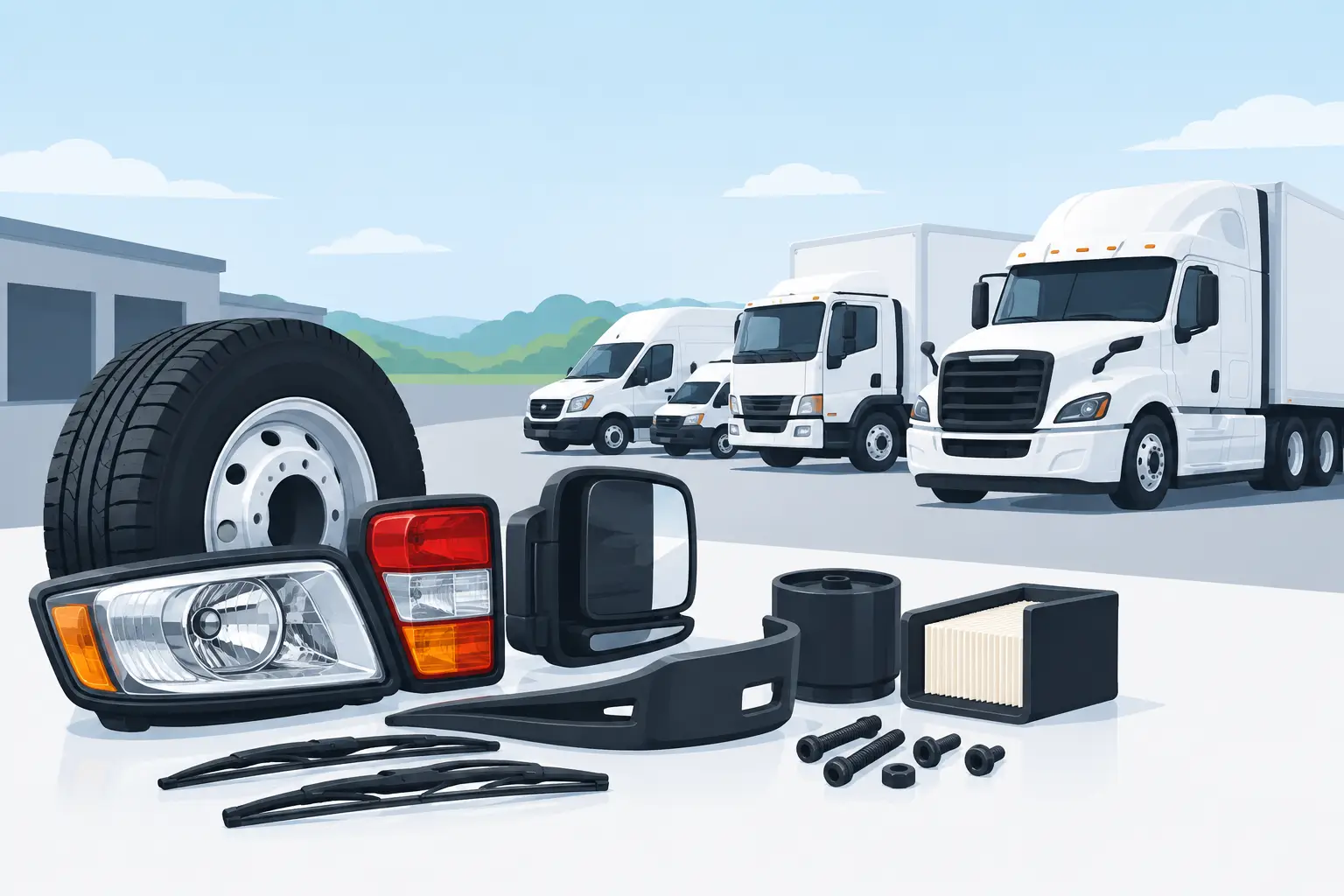
A cracked hood, loose step, missing lamp, or bent bumper can put a working truck out of service long before the engine has a problem. Essential fleet exterior maintenance parts protect the cab, support driver visibility, preserve access points, and keep a unit presentable for inspections and customers. For fleet maintenance, the objective is straightforward: identify damage early, order the correct configuration, and return the truck to work without creating a second fitment problem.
Exterior repairs are rarely one-size-fits-all. A replacement part may look correct at first glance but fail to fit because the truck has a different hood length, headlamp arrangement, grille design, axle position, cab style, or production-year break. That is why exterior maintenance starts with positive truck identification, not a general description of the part.
Essential Fleet Exterior Maintenance Parts to Stock
The right stocking plan depends on fleet size, routes, equipment age, and whether repairs are handled in-house. A linehaul fleet that sees highway miles will prioritize lighting, bumper assemblies, mirror-related components, and front-end repair items. A vocational fleet working in yards, construction sites, or refuse routes may use more steps, fenders, battery boxes, hood components, and lower-body panels.
Hoods, fenders, and front-end panels
Fiberglass hoods, fenders, extensions, grille surrounds, and related front-end panels take the first hit from road debris, minor collisions, tire spray, and tight loading areas. Small cracks should not be ignored. Vibration can extend a repairable crack into a larger structural failure, particularly around hinge areas, headlamp openings, and mounting points.
When replacing a hood, confirm more than the truck make. Verify the model series, year range, hood length, headlight style, grille configuration, air intake location, and hinge arrangement. A conventional hood that fits one version of a truck may not match another version with a different axle setting or revised front-end design. The same approach applies to fenders and extensions, where contour and mounting locations must match the existing assembly.
Grilles, surrounds, and bumpers
A broken grille does more than affect appearance. It can leave the radiator area more exposed to debris and can signal hidden damage behind the front end. Grille surrounds and headlamp bezels also matter because they hold alignment across the complete front assembly. Replacing one damaged piece without checking adjacent panels often leads to uneven gaps or unsupported mounting tabs.
Bumpers deserve regular inspection for bends, broken brackets, corrosion, and loose hardware. A bumper that has been pushed back can interfere with hood operation, lighting alignment, or front-end panels. On trucks that operate at docks, terminals, and crowded job sites, bumpers are routine wear items. Keeping the correct bumper and hardware information on file prevents a minor impact from becoming an extended downtime event.
Lighting and visibility components
Headlamps, turn signals, marker lamps, bezels, and mounting hardware are maintenance parts, not cosmetic extras. A cloudy lens reduces usable light. A broken mounting tab can let a lamp shake out of adjustment. Water intrusion can create repeated electrical issues that appear intermittent until the unit is inspected closely.
Match lighting by the complete front-end configuration. The same truck model can use different headlamp styles across model years or hood designs, and a lamp designed for one grille or bezel arrangement may not sit correctly in another. Before ordering, record the lamp location, lens shape, connector type if applicable, and the surrounding grille or hood layout.
Steps, fairings, and cab access parts
Drivers use steps, grab areas, and door-adjacent components every day. Damaged steps are a safety issue and can lead to slips, loose mounting hardware, or damage to the cab structure. Inspect tread surfaces, support brackets, fasteners, and nearby fairing panels together. If a step has been bent by a curb or object strike, the bracket behind it may also need attention.
Roof fairings, side fairings, and lower cab panels can be vulnerable on trucks that run tight routes or encounter debris. Aerodynamic components also affect appearance and can create noise or vibration when mounting points fail. The trade-off is simple: a cosmetic crack that is stable may be scheduled with other body work, but a loose fairing or panel needs immediate attention before it becomes a road hazard.
Battery boxes, fuel tanks, and air cleaners
Battery boxes and covers protect batteries from road spray, debris, and accidental contact. A damaged box, broken cover latch, or missing step section can expose electrical components and make routine service harder. Check for corrosion, damaged straps, loose lids, and cracked mounting areas.
Fuel tanks and related exterior components require a more careful response. Look for dents near straps, damaged steps, loose shields, cap issues, and abrasion points. Any suspected leak, compromised mounting, or fuel-system damage should move ahead of normal body work. Air cleaner housings and intake-related exterior parts also need inspection after front-end impacts because damaged ducting or housings can affect engine protection and performance.
Build Exterior Inspections Into PM Service
Exterior maintenance works best when it is included in a repeatable preventive maintenance process. Drivers can catch obvious damage during pre-trip and post-trip checks, while technicians should inspect mounting points and hidden areas during scheduled service. The goal is to find parts while they are still safe to plan, source, and install.
A useful exterior inspection should cover these items:
- Hood hinges, latches, cracks, and alignment at the grille and fenders
- Headlamps, marker lamps, turn signals, lenses, bezels, and mounting tabs
- Bumper condition, brackets, fasteners, and evidence of impact movement
- Steps, grab areas, battery boxes, doors, and lower cab access components
- Fenders, extensions, fairings, and loose or missing panel hardware
- Fuel tank straps, covers, shields, visible abrasion, and signs of leakage
Document damage with photos and note the exact truck number, VIN, model, and component location. Photos are particularly useful for front-end parts because they capture grille layouts, lamp style, hood contours, and the relationship between adjacent panels. That information shortens the identification process and helps avoid ordering a part based on an incomplete description.
Get Fitment Right Before the Truck Is Down
The best time to identify a recurring replacement part is before a truck is parked waiting for it. Fleet managers can build a basic profile for every unit that includes make, model series, year, VIN, hood type, wheelbase or axle configuration where relevant, and notes on lighting or grille variations. For older trucks, add photos of the front end and cab access areas to the unit file.
Do not assume two trucks purchased in the same year share the same exterior parts. Fleet acquisitions, previous collision repairs, factory updates, and vocational upfitting can all create exceptions. A truck may have a replacement hood from a different production range, a revised grille, or lamps changed during a prior repair. Comparing the damaged component to the truck’s current configuration is more reliable than relying on year alone.
When a part is difficult to identify, provide the details that affect fitment: truck make and series, model year, VIN when available, photos, hood length, grille style, number and arrangement of headlamps, and any visible part number. For bumper, step, fairing, and tank-related items, include mounting photos and measurements when possible. That gives the parts team enough information to separate close applications before an order is placed.
Plan Parts Around Repair Priority
Not every exterior defect demands the same response. Broken lighting, loose panels, damaged steps, fuel-related concerns, and hood latch problems are immediate safety or operating issues. Parts that affect legal visibility or secure vehicle operation should be addressed before the unit returns to service.
Other repairs can be planned. A stable crack in a nonstructural panel or a worn grille may be grouped with paint work, a scheduled refurbishment, or a larger collision repair. That approach controls labor time and keeps trucks available, provided the panel remains secure and does not expose critical components. The right decision depends on the truck’s duty cycle, inspection requirements, and the risk that the damage will spread.
Front Ends 4 Trucks supports commercial truck repair operations that need exterior components matched to the specific truck, not a close guess. Keep accurate unit information, inspect the high-contact parts regularly, and verify the complete configuration before ordering. A few minutes spent confirming fitment can prevent days of downtime waiting on the part that should have been ordered first.