

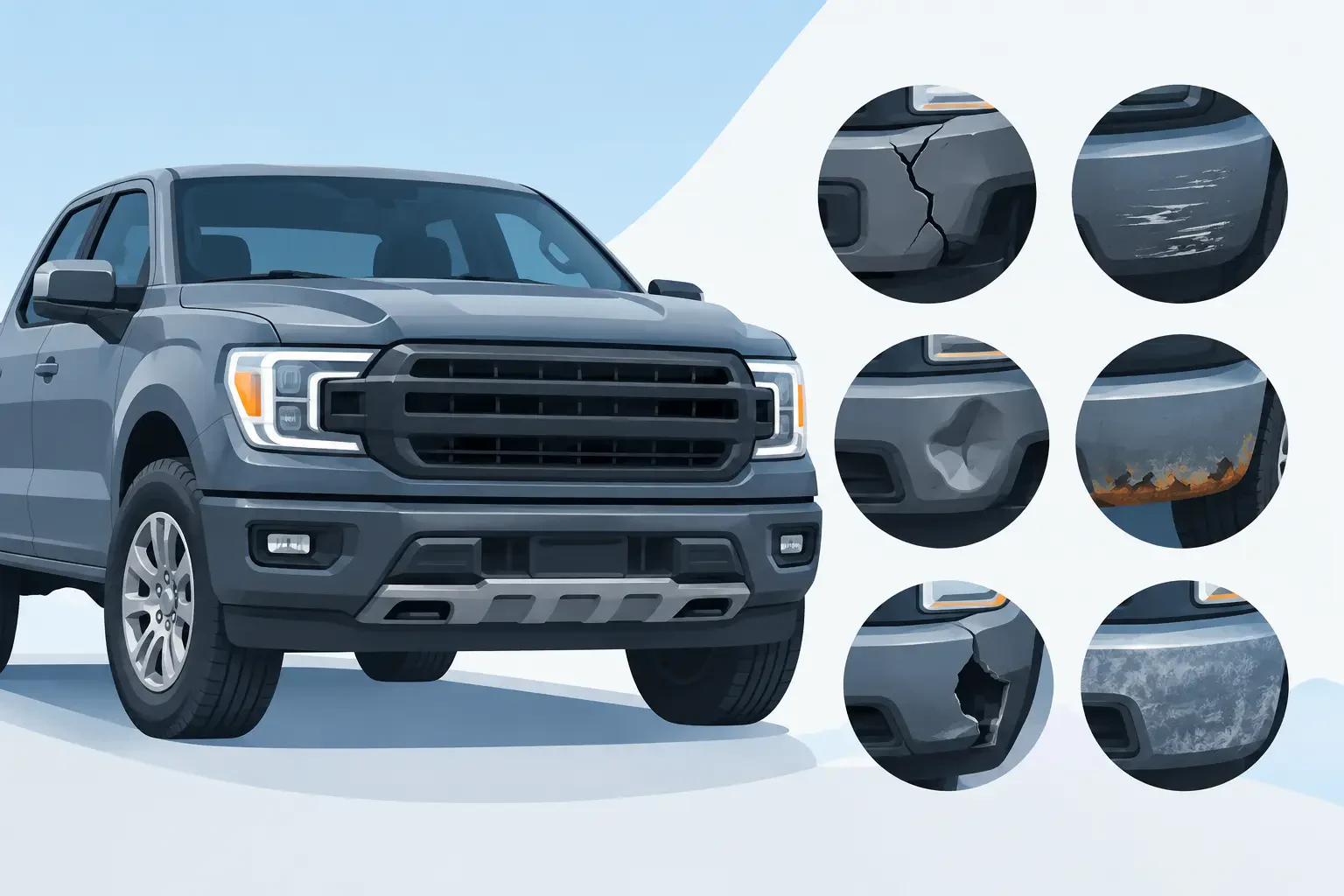
A bumper can look serviceable from 10 feet away and still be the reason a hood will not latch, a headlamp sits crooked, or a grille keeps cracking at its mounts. Knowing when to replace a truck bumper is not just a cosmetic call. On a working medium- or heavy-duty truck, the bumper is part of the front-end structure that holds alignment between several expensive exterior components.
For a fleet, repair shop, or owner-operator, the right decision comes down to damage location, mounting condition, corrosion, and the truck’s exact configuration. A straight bumper with surface scuffs may be worth keeping. A bumper that has moved the brackets, distorted the front end, or no longer supports mounted equipment usually needs to come off.
When should you replace a truck bumper?
Replace the bumper when damage affects its ability to mount securely, protect the front end, carry attached equipment, or maintain correct clearance around the hood, grille, headlights, and tires. A repair can make sense for minor cosmetic damage, but it is not the low-cost option if it leaves hidden damage in place or creates repeat fitment problems.
The following signs are the practical line between a bumper that can remain in service and one that should be replaced.
1. The bumper mounts or brackets are bent
Mounting damage is one of the clearest replacement indicators. After even a low-speed strike, inspect the bumper brackets, frame-mounted supports, isolators, bolts, and mounting holes. A bumper may have only a small crease while the brackets have shifted enough to pull it out of position.
Look for uneven gaps from side to side, hardware that will not tighten correctly, elongated bolt holes, cracked welds, or brackets that have been heated and straightened more than once. If the bumper cannot sit level and hold position under normal vibration, replacement is the safer repair. Installing a new bumper on damaged brackets will not solve the problem, so verify both pieces before ordering.
2. It is pushing into the hood, grille, or lighting
Front-end components are designed to work within specific clearances. If the bumper is contacting the grille surround, lower hood edge, fiberglass hood, fender extension, or headlamp assembly, do not treat that as a simple appearance issue. Continued contact can crack fiberglass, damage plastic grille parts, wear through paint, and create water-entry points around lighting.
Check hood operation before and after opening it. On tilt-hood trucks, a bumper set too high or too far rearward can interfere with the hood’s travel. On conventional cab models, it can affect the lower grille area and headlamp alignment. A truck that returns from a bumper repair with new rubbing marks has not been fully corrected.
3. Corrosion has weakened the metal
Surface rust can often be cleaned and refinished. Rust that has scaled the metal, opened seams, weakened mounting points, or formed holes is different. This is especially common on snow-belt trucks, refuse units, municipal equipment, and vocational trucks exposed to salt, chemicals, and frequent wash cycles.
Inspect the back side of the bumper as carefully as the face. Corrosion often begins around brackets, welds, tow points, and areas where debris holds moisture. If you can see thinning metal, severe pitting, or separation at a structural joint, replacement is more reliable than patching. A painted-over rust repair may look acceptable briefly, but it does not restore the bumper’s original strength.
4. The bumper is cracked, split, or badly creased
Steel bumpers can sometimes be repaired when damage is isolated and mounting geometry remains correct. The trade-off is labor. Pulling a deep crease, welding a split, grinding the repair, refinishing the surface, and checking final alignment can cost more than a correctly matched replacement bumper.
Cracks near a mounting point, step area, tow opening, or accessory mount deserve particular attention. These locations carry load and vibration. A crack that appears stable in the shop can spread quickly on a truck running rough job sites or long highway miles. Aluminum and composite bumper components have their own repair limits, so use the material type and damage location to guide the decision.
5. Mounted equipment no longer sits correctly
Many commercial bumpers carry more than impact protection. Depending on the truck, they may support fog lights, auxiliary lamps, license plates, sensors, air dam panels, tow hardware, corner trim, or step components. If these items are loose, misaligned, or repeatedly breaking after an impact, inspect the bumper itself rather than replacing only the attachments.
A distorted mounting surface can point lights upward or downward, leave wiring exposed, and place stress on lamp housings. Make sure replacement planning includes all related parts. The bumper may be correct for the truck series but still require the proper lamp openings, sensor provisions, brackets, and finish for that specific build.
6. Previous repairs are failing
A bumper with multiple weld repairs, filler, drilled mounting holes, or improvised brackets has usually reached the end of a cost-effective service life. Each repair can change how the bumper transfers vibration and impact loads. It can also make future removal more difficult when rusted hardware and altered mounts are involved.
This matters on fleet trucks where downtime is expensive. Reworking an old bumper may keep a truck out of service longer than installing a replacement component with known fitment. If the same front-end alignment issue returns after each repair, stop treating the symptom and inspect the complete bumper and bracket assembly.
7. The repair estimate is too close to replacement cost
A replacement decision should include labor, not just the price of the part. Minor scuffs and shallow dents are often repairable. Once the job requires removal, straightening, welding, corrosion treatment, refinishing, bracket work, and repeated fit checks, replacement can be the more economical route.
Factor in the risk of a poor repair as well. A bumper that does not fit correctly can damage a new grille, extension, headlamp, or hood. Saving money on the bumper while creating a second repair order is not a savings. For collision work, compare the complete repair cost against a replacement bumper that matches the truck’s year, make, model, and front-end configuration.
What to inspect before ordering a replacement bumper
Do not identify a commercial-truck bumper by make alone. The same manufacturer may use different bumpers across model years, axle configurations, hood lengths, grille styles, and headlamp layouts. A bumper for one version of a truck can look close enough to order and still fail at the mounting points or leave the wrong clearance around adjacent parts.
Start with the truck’s VIN and confirm the model, production year, and cab or hood configuration. Then inspect the existing bumper for its overall width, end shape, center opening, lamp cutouts, tow provisions, step configuration, and bracket spacing. If the original part is damaged beyond recognition, use the undamaged brackets, grille, hood, and lighting arrangement as additional identifiers.
Also determine whether the collision affected the frame horns, radiator support, hood hinges, grille surround, fenders, or bumper brackets. A new bumper should be the final fit-up component in a properly aligned front end, not a part used to hide damage behind it.
Repair or replacement: make the call before downtime grows
Minor damage does not automatically require a new bumper. A sound bumper with no cracks, no mounting movement, and no interference with other components may only need refinishing or a limited repair. That is often the practical choice for a working truck where appearance is secondary and the structure remains intact.
Replacement becomes the better call when the bumper cannot be secured correctly, has significant corrosion or cracks, affects hood and lighting alignment, or requires enough labor that repair no longer makes financial sense. For trucks with a specialty configuration or an unclear application, Front Ends 4 Trucks can help identify the correct exterior component by the details that matter – not just the badge on the grille.
Before putting the truck back on the road, cycle the hood, check light aim and wiring clearance, verify fastener torque, and inspect every gap around the front end. A correctly fitted bumper protects more than the front of the truck. It prevents a small collision repair from turning into recurring damage and avoidable downtime.