

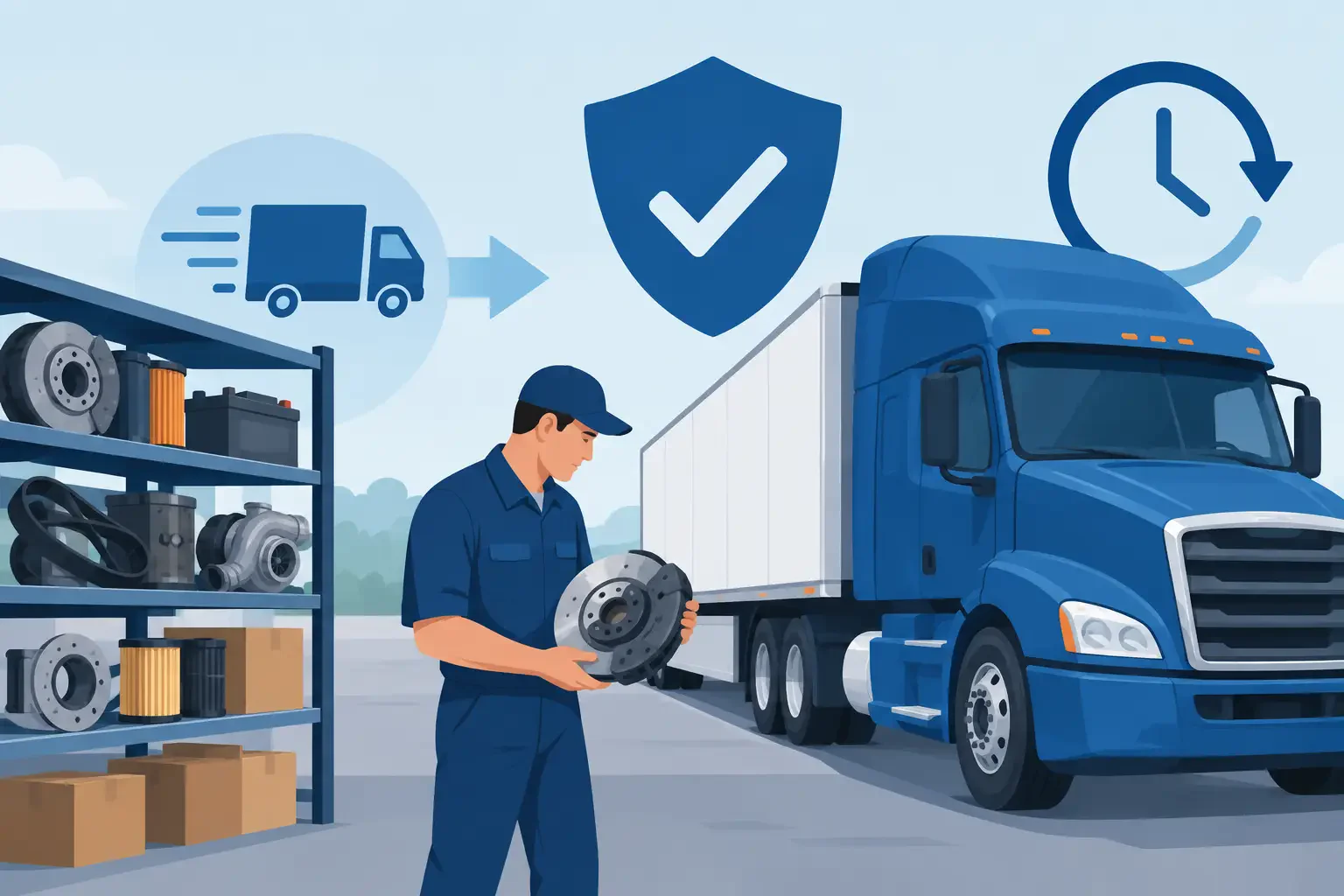
A damaged hood, cracked grille surround, or broken headlamp mounting panel can put a commercial truck out of service long after the collision repair is otherwise complete. The difference is often not the repair itself. It is whether body parts suppliers can identify the exact component needed before the wrong part reaches the shop.
For heavy-duty trucks, “close enough” can become an expensive delay. A hood may look correct from the front but have the wrong length, headlamp opening, hinge setup, air intake arrangement, or grille style. A bumper may fit one axle configuration and interfere with another. Getting fitment right on the first order protects labor time, controls repair cost, and gets the truck back to work.
What Sets Heavy-Duty Body Parts Suppliers Apart
Commercial truck body parts are not selected the way passenger-car parts are selected. A year, make, and model is a starting point, not a complete identification. A single truck series can carry several hood configurations, cab styles, grille designs, and lighting layouts across its production run. Vocational applications add another layer, especially when axle placement, wheelbase, or upfitted equipment affects clearance.
A qualified supplier works from the details that change fit. That includes model year range, truck series, hood length, headlight type, grille configuration, number of axles, cab style, and component location. These specifications are not catalog clutter. They determine whether a replacement part can be installed without cutting, drilling, modifying brackets, or ordering a second part after the first one fails to fit.
This matters most on front-end repairs. Hoods, fenders, extensions, grille surrounds, bumpers, and lighting components all meet at multiple attachment points. One incorrect panel can hold up the entire assembly. For a fleet, that can mean a truck sitting while revenue work waits. For a collision center, it can tie up a repair bay and delay delivery to the customer.
Start With the Truck Configuration, Not the Part Name
A repair order may say “replace hood” or “need Freightliner grille.” That is not enough information to place a dependable order. Before searching a catalog or calling for assistance, confirm the truck’s complete configuration from the VIN, cab tag, existing component, and visual inspection.
The strongest identification process captures the make, exact series, model year, and the physical design of the damaged area. For a hood, note the overall length, hinge style, headlamp arrangement, intake placement, and whether the hood was built for a set-forward or set-back axle. For grille and surround work, verify the number and placement of openings, trim style, and the headlamp design used with that front end.
Photos are useful when paired with specifications. A clear front view, side view, close-up of mounting points, and image of the damaged component can help resolve an exception that a basic model search cannot. Photos alone should not replace measurements or production details, particularly on trucks that may have been repaired or updated before.
Why model years can mislead
Production changes do not always follow clean calendar-year breaks. A truck may have an early-production front end, a late-production front end, or a configuration shared across only part of a model year. The same model name can also appear on day-cab, sleeper, regional-haul, and vocational equipment with different exterior parts.
That is why experienced parts buyers read fitment exclusions as carefully as fitment claims. If a listing specifies a particular headlamp layout, grille opening, axle position, or hood length, treat that detail as a requirement. A part listed for a similar truck that excludes your configuration is not a workable substitute simply because the panel shape appears close.
Match the Part to the Repair Scope
The fastest repair is not always the one with the lowest initial part price. A shop needs to decide whether the damage calls for a single replacement panel, a related group of components, or a larger front-end assembly plan.
A cracked fender extension may be a straightforward panel replacement if the hood, mounting structure, and adjacent grille surround are intact. But when an impact has shifted brackets, torn mounting tabs, or damaged multiple mating surfaces, ordering one visible panel can create a stop-start repair. Checking the surrounding pieces before ordering helps prevent a second freight shipment and a second round of teardown.
Fiberglass hoods deserve particular attention. Confirm whether the replacement is intended to match the original hood design, including mounting points, headlamp openings, grille relationship, and accessories. Also account for the condition of hinges, latches, supports, and hardware. A new hood cannot correct worn or bent supporting components on its own.
The same approach applies to lighting. A replacement headlamp, bezel, mounting panel, or grille insert must match the design used on that specific front end. Changes in lamp shape or mounting location can affect more than appearance. They can change how adjacent body panels align and how the repair is completed.
Use Fitment Notes to Avoid Common Ordering Errors
Catalog filters are valuable, but filters do not remove the need for verification. The best truck body parts suppliers provide notes that identify key design features and explicit non-fit conditions. Those notes should guide the order, especially when multiple results appear for one truck series.
Before submitting an order, compare the listing against the truck in the shop. Confirm whether the component is left-hand, right-hand, or universal; whether it is a direct replacement or part of a related assembly; and whether it requires reuse of existing hardware or companion parts. If the catalog calls out a grille type, headlight style, hood measurement, or axle arrangement, compare that specification to the actual truck rather than relying on a prior invoice.
Replacement and refurbishment work often involves trucks with incomplete histories. An owner-operator may have acquired a truck with a previously replaced hood. A fleet unit may have received updates after an earlier accident. In those cases, the component currently on the truck can be more relevant than the original factory configuration. The correct part is the one that fits the vehicle as it is being repaired, provided the repair plan does not include restoring a different original configuration.
Balance Cost, Availability, and Downtime
Aftermarket exterior parts give repair shops and fleets a practical option when original equipment pricing, availability, or discontinued part numbers become a problem. The value is strongest when the supplier has broad coverage within commercial truck makes and provides enough fitment detail to narrow the selection accurately.
Still, price should not be evaluated in isolation. A lower-cost part that needs modification, arrives with the wrong openings, or cannot be installed with the existing adjacent panels costs more once labor, delays, return handling, and truck downtime are counted. The right comparison is installed cost and time back in service.
Availability also changes the decision. For a customer handling cosmetic refurbishment, it may make sense to wait for an exact appearance match or combine several parts into a planned update. For a working fleet truck with collision damage, the priority may be a compatible replacement that restores safe operation and keeps the repair schedule moving. The right choice depends on the truck’s job, condition, and deadline.
When to Call Instead of Guessing
Self-service catalogs work well when the vehicle configuration and part description are clear. Call for technical assistance when the truck falls between listed applications, the damaged component has no visible part number, or the fitment notes do not match what is in the bay. A quick conversation before ordering is usually less costly than a return after a failed test fit.
Have the truck make, series, year, VIN, configuration details, and clear photos ready. Describe the component by location and function, not only by a general name. For example, identify whether the requested part is a left-hand hood extension for a specific headlamp arrangement rather than simply asking for a fender piece. That gives the parts specialist a usable starting point.
Front Ends 4 Trucks focuses on the exterior components that keep medium- and heavy-duty trucks repairable, from hoods and grilles to fairings, doors, steps, fuel tanks, and related panels. When an application is unusual or a catalog match leaves questions, direct support can help narrow the fitment before the order is placed.
A truck does not need another nearly-right part sitting in the corner of the shop. Verify the configuration, read every fitment detail, inspect the adjoining components, and ask for help when the application is unclear. That discipline is what turns a replacement part into a completed repair.