

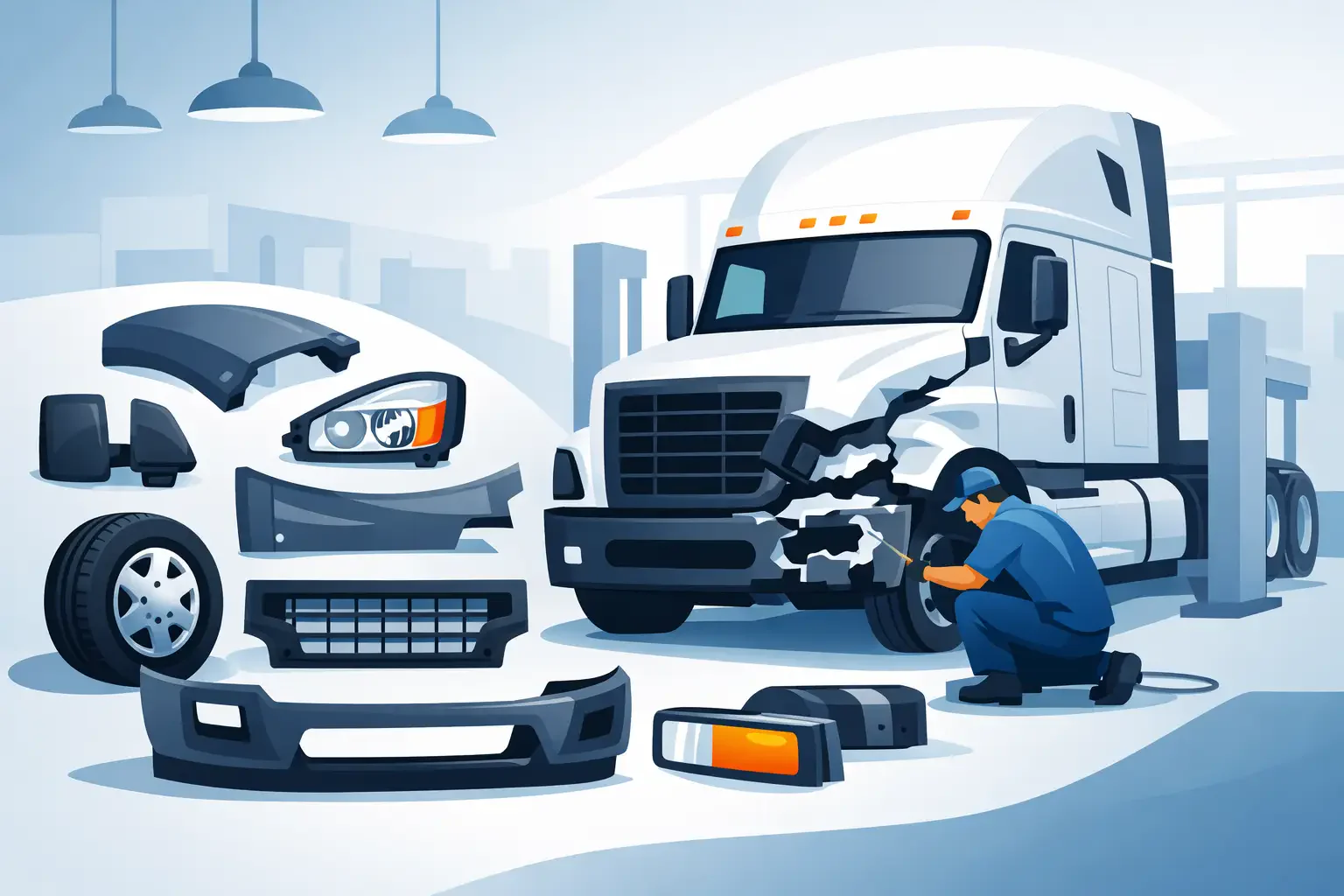
A damaged hood or grille is not just a cosmetic repair when the truck is scheduled to move freight, serve a route, or return to a customer. The right fleet truck collision repair parts must match the truck’s actual configuration, not just its make and model badge. A wrong hood length, headlamp opening, grille style, or hinge setup can stop a repair before installation begins.
For fleet maintenance departments, body shops, and commercial collision centers, the fastest path to a finished repair is accurate identification before ordering. That means treating fitment details as part of the estimate, not as a last check after the parts arrive.
Start With the Truck Configuration, Not the Part Name
“Freightliner hood” or “Peterbilt bumper” is rarely enough information to order correctly. Commercial truck platforms often have several front-end designs within the same model family. Production year ranges can overlap. A truck may have an extended hood, a short hood, a set-forward front axle, a set-back axle, or a different grille and lighting package than another truck carrying the same model designation.
Start with the VIN and the truck’s complete model information, then verify the visible configuration. For collision work, photos of the complete front end are as useful as the estimate. Photograph the hood, grille, headlamp assemblies, bumper, fender extensions, side intake area, hinge area, and any damaged mounting points. Include a straight-on front photo and side photos showing hood profile and axle position.
The damaged component itself can also provide useful identifiers. Check for molded numbers, manufacturer labels, lamp part numbers, grille bar count, mounting-hole patterns, and the shape of adjacent panels. A replacement part that looks close in a single photo may still be wrong at the hinge, headlamp, or cowl.
Details That Commonly Change Fitment
Hood length is one of the most common sources of ordering errors. A conventional truck can use multiple hood lengths within a series, and each length changes the relationship among the grille, bumper, headlamps, fenders, hood extensions, and inner structure. Do not assume a hood fits because the cab appears similar.
Headlight configuration matters just as much. Some applications use rectangular lamps, others use composite lamps, and some have different lamp locations or bezel designs across production years. The grille surround and hood openings may change with the lighting package.
Other fitment checkpoints include front axle arrangement, cab style, air intake location, grille material or pattern, hinge style, and whether the truck has a one-piece or multi-piece front-end assembly. When any of these details are unclear, pause the order and verify them. A short phone call is less expensive than freight on an incorrect oversized component.
Build the Repair Around Related Components
Collision damage often travels farther than the first broken panel shows. A hood may be cracked at the nose, but the impact can also damage the grille, grille surround, headlamp buckets, bumper brackets, fender extensions, hood hinges, latch hardware, and mounting supports. Ordering only the visibly damaged outer piece can create another delay once the truck is disassembled.
Before placing the order, inspect the complete repair area with the damaged parts removed where practical. Look for stress cracks around fiberglass mounting points, elongated bolt holes, bent brackets, broken retainers, and damaged inner panels. On older fleet equipment, prior repairs can complicate fitment as well. A truck may already have a non-original bumper, lamp assembly, or grille fitted during an earlier repair.
For a front-end repair, it helps to separate the order into the primary part, related exterior parts, and hardware or support items. The primary part may be a hood, fender, bumper, door, or cab panel. Related exterior parts are the components that must align with it, such as lamps, grilles, extensions, and trim. Hardware and support items include hinges, latches, brackets, mounting hardware, and reinforcements.
This approach reduces the chance that a truck sits in a bay waiting on a small but necessary component. It also allows the repair team to compare the complete assembly before paint and final installation.
Choosing Aftermarket Fleet Truck Collision Repair Parts
Aftermarket parts can be a practical choice for commercial truck repairs when the application is correctly identified and the part is sourced from a supplier that understands truck-specific configurations. The value is not simply a lower purchase price. It is the ability to keep older trucks repairable, find replacement body components for widely used platforms, and control repair costs across a fleet.
The trade-off is that aftermarket fitment must be evaluated with the same discipline applied to any heavy-duty replacement part. Verify the stated year range, model series, hood or cab configuration, and exclusions. If a listing specifies a particular grille, headlight arrangement, or axle placement, treat that language as a requirement rather than a general suggestion.
Fiberglass hoods and panels deserve a careful pre-installation inspection. Check the part before paint for shipping damage, mounting location condition, edge finish, and alignment with the transferred components. Dry-fit major panels whenever the repair schedule allows. This is especially useful on a truck with collision damage, prior body work, or frame and support repairs that may affect panel alignment.
A durable repair also depends on correcting the underlying cause of a misaligned front end. Replacing a hood without addressing bent hinges, a shifted support, a damaged bumper bracket, or worn latch components can create new cracks and poor panel gaps. The replacement part should finish the repair, not mask a structural or mounting problem.
Information to Have Ready Before You Order
The best parts request is specific enough that a counterperson or buyer can rule out the wrong options quickly. Along with the truck make, model, and year, have the VIN available and provide clear photos if the application has variations. State whether the truck uses a particular hood length, grille design, headlight style, axle position, or cab configuration.
For hoods, identify whether the part includes or excludes items such as grilles, headlamps, hinge hardware, reinforcement, or air intake pieces. For bumpers, confirm material, overall style, fog lamp provisions, tow-hook openings, bracket requirements, and whether the truck uses a specific set-back axle arrangement. For doors and cab components, verify the side, window arrangement, mirror mounting, interior trim needs, and any electrical or lighting provisions.
If you are replacing several damaged front-end parts, send the entire list together. A supplier can often identify related fitment issues that are not obvious when each item is requested separately. Front Ends 4 Trucks works across commercial truck exterior categories and can assist when the online catalog does not fully resolve an uncommon application.
Protect the Repair Schedule After Delivery
Receiving inspection should happen before the truck is scheduled for paint or reassembly. Compare each item against the order and inspect oversized parts while the carrier is present when possible. Note visible freight damage immediately and retain packaging until the part has been checked against the truck.
Lay out related components together before installation. Confirm that the grille matches the hood opening, lamps match their bezels and mounting points, and bumper brackets correspond to the actual chassis arrangement. On fiberglass parts, test mounting points and panel gaps before transferring every accessory. Small adjustments are normal in body work, but major mismatch is a sign to stop and recheck the application.
Keep the original part until the replacement is verified whenever shop space permits. The original provides a direct reference for mounting locations, cutouts, hardware, and transferred components. It can also answer a question quickly when the truck has been modified or repaired before.
Accurate Fitment Keeps Trucks Productive
The part number matters, but the truck configuration matters more. Build every collision parts order around the truck’s specific front-end design, then inspect the surrounding components that must align with it. That discipline prevents avoidable returns, protects the repair schedule, and gets a working truck back where it belongs – on the road.
 English
  Spanish