

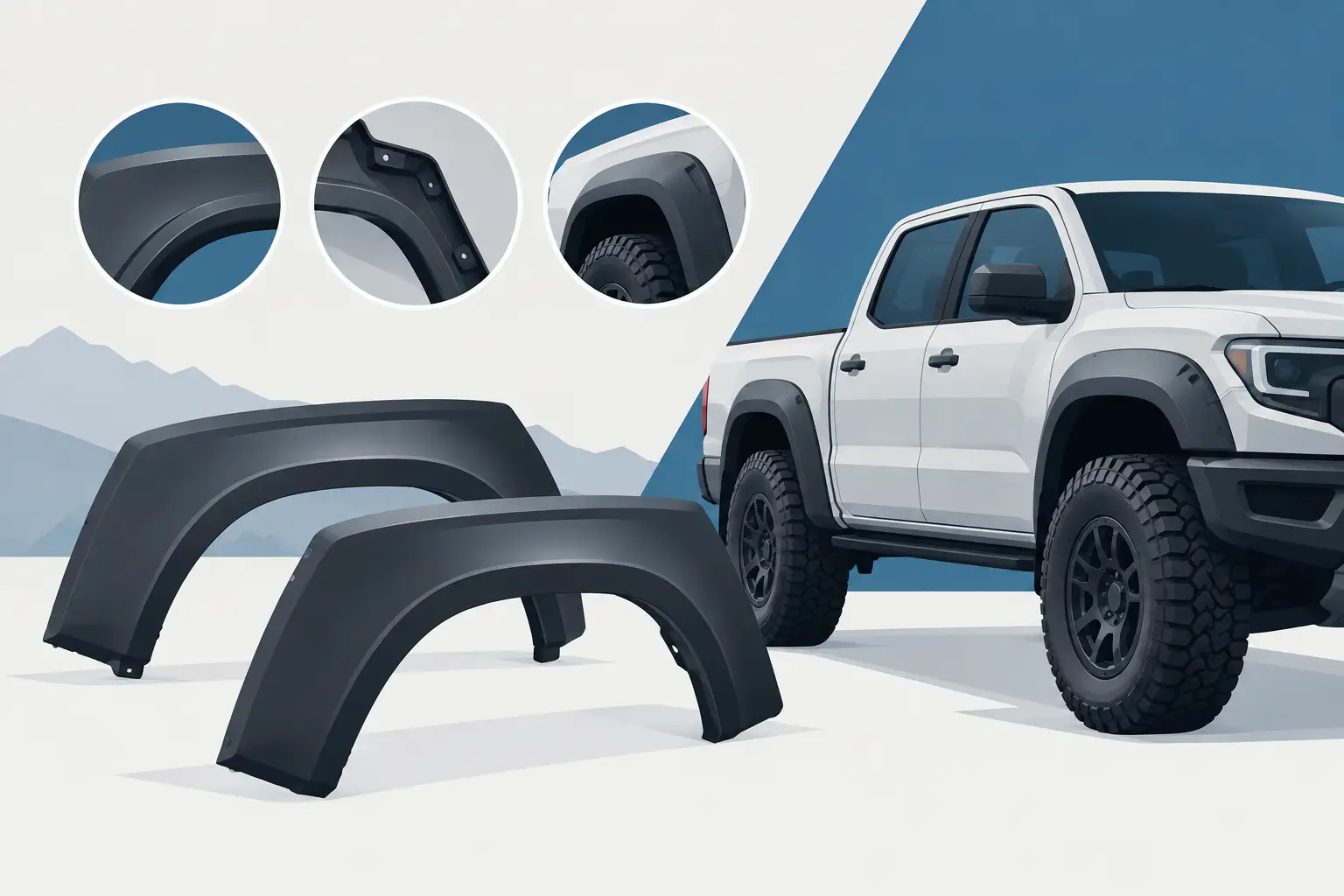
A damaged fender can look like a simple replacement until the truck is in the bay, the hood is opened, and the mounting holes do not line up. That is why fiberglass truck fender reviews need to be read differently for commercial equipment. The useful review is not the one that says a part “looks good.” It is the one that identifies the truck series, production year, hood style, headlamp setup, and what happened during installation.
For a collision center, fleet shop, or owner-operator, the question is not whether fiberglass is a good material in the abstract. The question is whether a specific replacement fender will install correctly on a specific truck and return it to service without creating another repair problem.
What Fiberglass Fender Reviews Should Actually Tell You
A dependable review gives details that can be verified against the truck in front of you. Look for references to the make, model, year range, and configuration. On heavy-duty trucks, a model badge alone is often not enough. The same series may use different hood lengths, grille profiles, headlight arrangements, inner supports, or mounting patterns across production runs.
A review that says a fender fit a 2007-2010 truck may be useful, but only after confirming the truck has the same hood and front-end configuration as the reviewer’s application. A reviewer may have installed a part on a conventional day cab while your repair involves a setback-axle vocational unit or a truck with a different headlamp package. Those differences can change the part required.
Pay attention to comments about the body line where the fender meets the hood, bumper, grille surround, and door. Small gaps can often be adjusted during body work. A major mismatch at the headlamp opening or hood edge usually points to an incorrect application, shipping damage, or a part that requires more fitting work than the buyer expected.
Fitment Matters More Than a Star Rating
The strongest fiberglass truck fender reviews explain whether the installer matched the part number to the truck’s exact configuration before ordering. A five-star rating without that information is less useful than a three-star review that documents a required adjustment at a bracket or lower mounting point.
Fiberglass replacement panels are not always a bolt-on substitute in the same sense as an OEM stamped steel fender. Many commercial fiberglass components are produced as service parts and may require standard body-shop preparation: test fitting, edge finishing, minor hole adjustment, primer, blocking, and paint. That is normal when understood before the job starts. It becomes a problem when a buyer expects a painted, ready-to-install panel with zero shop labor.
Read reviews with the repair scope in mind. If the truck is already receiving a hood, grille, bumper, headlamp housing, and fender after a front-end collision, the technician has more opportunity to align the assembly as a system. If only one fender is being replaced on an otherwise undamaged truck, panel-to-panel alignment and color matching may require closer attention.
Configuration Details to Verify Before Ordering
Before treating any review as proof of fitment, compare the vehicle and part details. Confirm the truck manufacturer, exact model series, model year, and side needed. Then verify the hood configuration, grille design, headlamp style, axle arrangement where applicable, and mounting or inner-fender design.
Also inspect the damaged part before removal. A cracked fiberglass fender can hide broken brackets, bent hood hinges, damaged headlamp supports, or a shifted bumper mount. Replacing the outer panel alone will not correct structural alignment issues behind it. Reviews that mention “the holes did not line up” may be describing a damaged truck rather than a defective fender.
How to Judge Material Quality From Real-World Feedback
Useful feedback on fiberglass quality usually centers on thickness, consistency, edge condition, and reinforcement around mounting areas. Those are practical indicators, especially for trucks that operate on job sites, regional routes, or rough access roads.
A well-made fiberglass fender should have consistent laminate coverage and enough reinforcement in areas that carry hardware, brackets, or vibration loads. Reviewers may describe a panel as heavier, thicker, or more rigid than another replacement part. Those comments can be helpful, but they do not replace checking whether the fender is designed for the exact truck application.
The finish is another area where review language needs context. A gel-coated surface is not a finished paint job. The panel should be inspected, prepared, primed as needed, and painted according to the coating manufacturer’s procedures. Minor surface preparation is expected in professional refinishing. Deep voids, severe warping, poor mold release, or cracks around stress areas are different issues and should be documented before installation.
Do not assume that a lighter fiberglass part is automatically inferior or that a heavier one is automatically better. Material design, reinforcement placement, mounting requirements, and the truck’s operating environment all matter. A local delivery truck and a severe-service vocational truck do not place the same demands on exterior body components.
Shipping Condition Can Change the Review
Freight damage can make a quality fender look like a poor product. Because commercial fenders are large, awkward panels, inspection at delivery is part of the purchasing process. A driver signing for a shipment without looking at the packaging and visible edges can lose valuable evidence if damage is found later.
Inspect the carton, pallet, shrink wrap, and exposed corners before accepting the shipment. Note crushed packaging, punctures, fork tine marks, or broken straps on the delivery receipt. If possible, photograph the packaging before opening and inspect the panel before it moves into the repair workflow.
Once unpacked, check the wheel opening, headlamp area, mounting flanges, lower edge, and any molded bracket locations. A crack at a mounting flange may not be visible until the part is lifted or positioned. If there is a problem, document it before sanding, drilling, painting, or attempting installation. Reviews that separate freight damage from manufacturing quality are far more useful to the next buyer.
Common Review Complaints and What They May Mean
“Needed drilling” is not automatically a failure. Some aftermarket fiberglass fenders are supplied with pilot locations or require final hole positioning during test fit. The concern is whether the adjustment is minor and expected, or whether multiple mounting points are significantly off for the listed application.
“Did not match my truck” should trigger a closer fitment check. The buyer may have selected the wrong year range, hood type, or headlamp configuration. On the other hand, it may reveal an inaccurate catalog description. The best course is to compare the truck’s physical features and original part details before assuming either conclusion.
“Paint took extra work” can mean several things. It may refer to normal prep labor, contamination, insufficient surface preparation, or an expectation that gel coat should accept topcoat without body-shop steps. Professional paint work requires the right prep process regardless of how clean a panel looks out of the box.
“Shipping took too long” is a purchasing issue, but it matters when a unit is down. When reviewing feedback, separate product quality from stock status, freight transit, and carrier handling. A correct part delayed by freight may still be the right repair solution, while an available part with poor fitment can cost more in labor and downtime.
A Better Way to Use Reviews Before You Buy
Treat reviews as one source of repair intelligence, not as the final fitment authority. Start with the truck’s VIN information and visible configuration. Record the year, series, hood length or design, grille and headlamp arrangement, and whether related panels were changed previously. Compare those details with the product description and exclusions.
If the application has any uncertainty, get the part details in front of a knowledgeable commercial-truck parts source before ordering. This is especially important for older trucks, mixed-year front-end conversions, fleet units rebuilt after prior collisions, and discontinued applications. A quick confirmation can prevent a return, repaint, and additional days out of service.
Front Ends 4 Trucks focuses on the identifiers that affect this decision: truck series, model years, hood configurations, grille styles, lighting layouts, and exceptions that can make similar-looking parts incompatible. For uncommon applications, direct parts support is often faster than trying to force a generic search result to fit the truck.
The best review is still a successful install. Verify the application before the order leaves, inspect the fender when it arrives, and test fit it before paint. That process gives the repair team the information that matters most: a replacement panel that belongs on the truck, not just one that resembles it.